
In Hue, there are dishes that aren’t meant to impress at first bite, but rather to be gradually understood and appreciated. Com Hen (clam rice) is one of them.
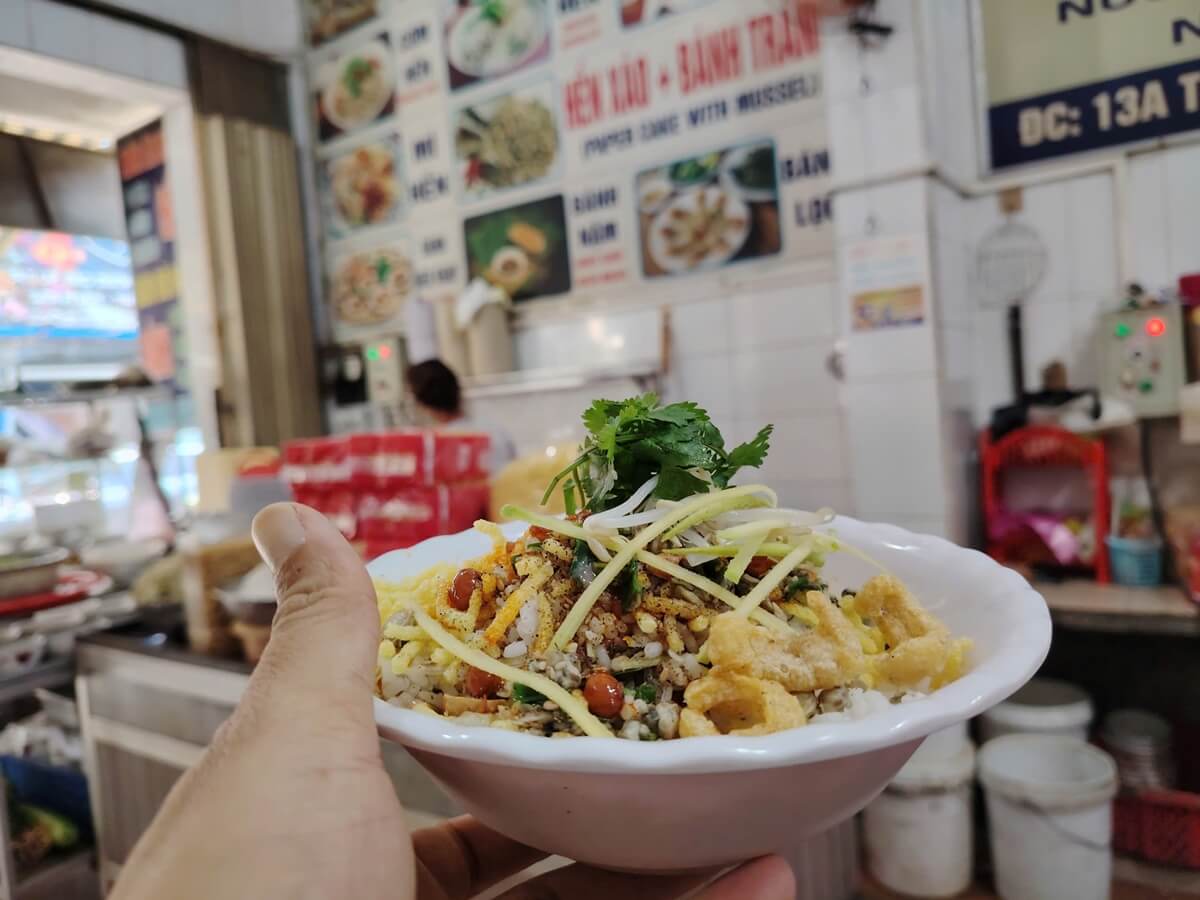
Many international travelers refer to this dish as “baby clam rice,” a seemingly simple name. But behind that small bowl lies a way of eating and a way of life that is very characteristic of the people of Hue: simple, refined, and shaped by a quiet sense of family care.
Not everyone will fall in love with it on the first try. Some may only taste a small amount just to understand it. But once you begin to see how locals eat and appreciate this dish, it becomes clear that it is more than just food. It is a part of Hue’s culture that is hard to find anywhere else.
So what exactly is Com Hen, and what makes it so special?
1. What is Com Hen (Baby Clam Rice)?
Baby clam rice is one of the most characteristic street foods in Hue cuisine.
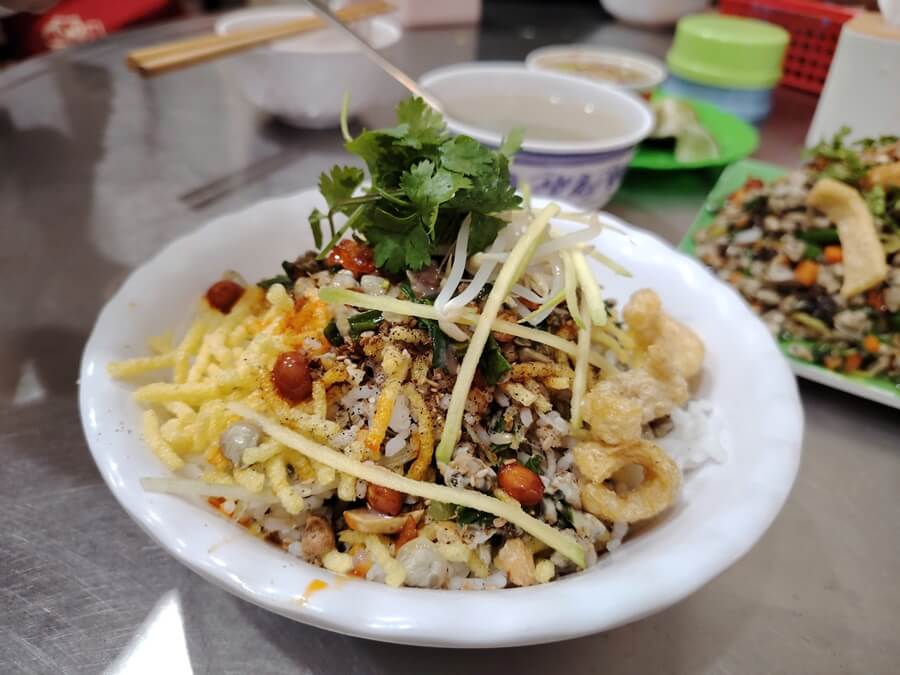
At first glance, the dish seems quite simple: cold rice served with small clams. But in reality, it is a carefully balanced combination of flavors.
A bowl of baby clam rice usually consists of cold rice, flavorful stir-fried clams, clam broth, and a variety of accompanying ingredients such as fresh herbs, chopped taro stems, banana blossoms, pork cracklings, roasted peanuts, and a small amount of shrimp paste. These ingredients are not eaten separately but are meant to be mixed together. This combination creates a taste that is both light and rich, with layers of crispness, spice, and a subtle briny depth from the shrimp paste.
What makes baby clam rice unique is not just the ingredients, but the way people in Hue build the dish from many small layers of flavor. Each component plays a distinct role, and only when they come together does the dish feel complete.
For this reason, clam rice is more than just rice with clams. It is a layered culinary experience that needs to be understood in the right way, and it represents a distinctive aspect of Hue’s food culture that is difficult to find elsewhere.
2. Why It’s a Cultural Dish in Hue
Clam rice has long been considered a “poor man’s dish.” Unlike dishes like banh khoai (Hue pancake), which require more elaborate preparation, clam rice is made from the simplest and most common ingredients.
In the past, when poor children near the ferry docks in Hue were hungry, their mothers would use leftover rice, add a few slices of wild taro stems often growing along the water’s edge, a handful of freshly picked herbs, a few clams gathered from the river, and some shrimp paste left over from the main meal. That was enough. A simple mixed dish was created to fill hungry stomachs during difficult times.
Over time, as life gradually improved, the dish also became more refined. People began adding roasted peanuts and a bit of oil to stir-fry the clams for more flavor. Leftover rice was no longer accidental but became a deliberate preparation. Hue women would often cook extra rice to save for meals for their husbands and children. As a result, clam rice is no longer just a dish to stave off hunger. It also reflects the thoughtfulness, care, and quiet affection that are characteristic of Hue women.
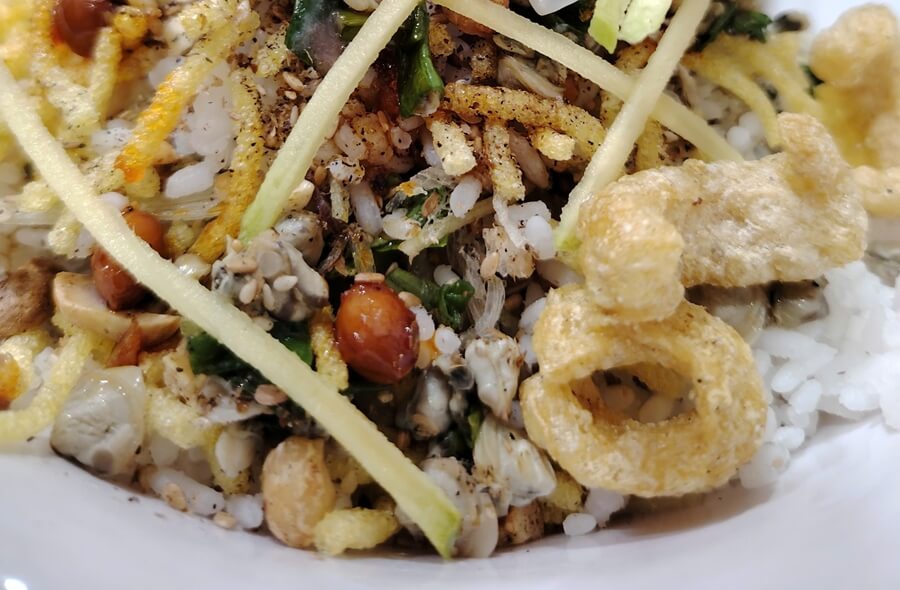
With the influence of meticulous and refined cooking, the dish gradually took on a new form. From just a few humble ingredients, clam rice today can include more than a dozen components, from clams and herbs to peanuts, sesame seeds, pork cracklings, shrimp paste, and clam broth. Everything is mixed together to create a layered flavor that is both complex and balanced, yet still rooted in its original simplicity.
Today, visitors can easily find clam rice in small local eateries, early-morning street stalls, or simple roadside spots. It is also commonly found in modest homes along the riverbank, under bamboo clusters on Con Hen islet. This area is considered the “capital” of the dish, not only because of its close connection to local life but also because it has long been known for its abundant and high-quality clams.
Besides this dish, you may also want to explore other popular local foods in Hue.
3. Taste & Experience
Clam rice isn’t a dish that makes a strong impression from the first spoonful. Its flavors develop slowly, in layers, and only truly become clear when everything is mixed together.
First, there is a mild yet rich saltiness from the stir-fried clams and shrimp paste. Then comes the slight richness of pork cracklings, the nuttiness of roasted peanuts, and a hint of sesame. Fresh vegetables, especially sliced taro stems and banana blossoms, add a crisp, airy, and refreshing contrast that balances the overall flavor. When clam broth is added, the dish becomes gentler, acting as a base that softens the stronger elements. And if chili is included, the heat spreads quickly, making the flavors more pronounced, though it can feel a bit overwhelming for first-time eaters.
What makes the dish especially interesting is its texture. A single spoonful can be soft, crispy, moist, and slightly dry all at once. No single ingredient stands out on its own, but when combined, they form a balanced and harmonious whole, even if it may feel a little unfamiliar at first.
For that reason, clam rice isn’t a dish you immediately fall in love with. It is more of an experience that takes time to appreciate. And sometimes, just a few small spoonfuls are enough to understand why people in Hue feel such a strong connection to it.
When you sit at a small local stall, you may notice how each bowl is prepared right in front of you, with ingredients added quickly but with a familiar rhythm.
This feeling is not only found in the bowl itself, but also begins in the space where the dish is prepared. In many local spots serving clam rice, you will see baskets of vegetables piled high, pans of golden peanut oil, and pots of clam broth kept warm on the stove. This broth is not only added to the dish but must also be kept consistently warm to preserve its clean flavor and prevent any unwanted odor.
These small details, often easy to overlook, are part of the experience. You are not just eating. You are gradually understanding how this dish exists in everyday life, shaped by the care and attention to detail of the people of Hue.
4. Should Travelers Try Com Hen?
It’s important to understand that clams live in the mud of the Perfume River, and the natural environment can affect their quality. If they are not properly cleaned and prepared, some undesirable elements may remain. Therefore, for international travelers, especially those with strict dietary preferences or health concerns, it is advisable to consider this before trying the dish.
However, this does not mean you should completely avoid it. For those who enjoy exploring local cuisine and feel comfortable with street food, com hen remains a distinctive part of Hue culture that is worth trying to better understand everyday life here.
If you are unsure, a more cautious approach is to try only a small portion. This allows you to experience the flavor and story of the dish without committing to a full serving.
On the other hand, for travelers who prioritize consistency, familiarity, or have sensitive digestive systems, choosing other, more suitable dishes may be a better option. Hue still offers many distinctive foods that are easier to enjoy and suited to a wide range of tastes.
For those who prefer a more curated experience, a Hue Street Food Tour offers a thoughtful way to explore local dishes while understanding how and where they are best enjoyed.
5. How to Eat Clam Rice
Clam rice is not meant to be eaten immediately after it is served. It requires a small preparatory step: mixing. And it is this step that creates the dish’s unique experience.
Start by mixing.
First, gently mix all the ingredients in the bowl with a spoon. Rice, clams, vegetables, peanuts, pork cracklings… everything needs to be combined. Do not rush as the locals often do this way slowly as their slow lifestyle. As you mix, you will see the layers gradually come together, forming a more unified whole where no single component feels separate.
Add a little clam broth.
Then, add a small amount of clam broth to moisten the rice and soften the stronger flavors. Locals often adjust it as they eat, adding more only when needed. The dish becomes gentler and easier to approach, especially for first-time visitors.
Adjust the spice to your taste.
If you are comfortable with spicy food, you can add a bit of chili, but start with a small amount. The heat does more than add intensity. It helps bring out the other flavors and makes the overall profile more defined.
Eat slowly, one spoonful at a time.
Take small bites and do not rush. Each spoonful offers a slightly different combination, sometimes more herbs, sometimes a deeper clam flavor, sometimes a mix that feels crisp and rich. This variation is what gives the dish its distinctive character.
And sometimes, just a few spoonfuls are enough to understand how people in Hue enjoy clam rice: slowly, simply, yet with a quiet sense of refinement.
6. Where to Eat
Here are some suggestions if you want to try clam rice in a way that feels close to local life. Each place has its own character. Nothing is overly fancy, but each offers a clear sense of the spirit behind this dish.
Ba Hoa Restaurant – 11A Truong Dinh Street, Hue City
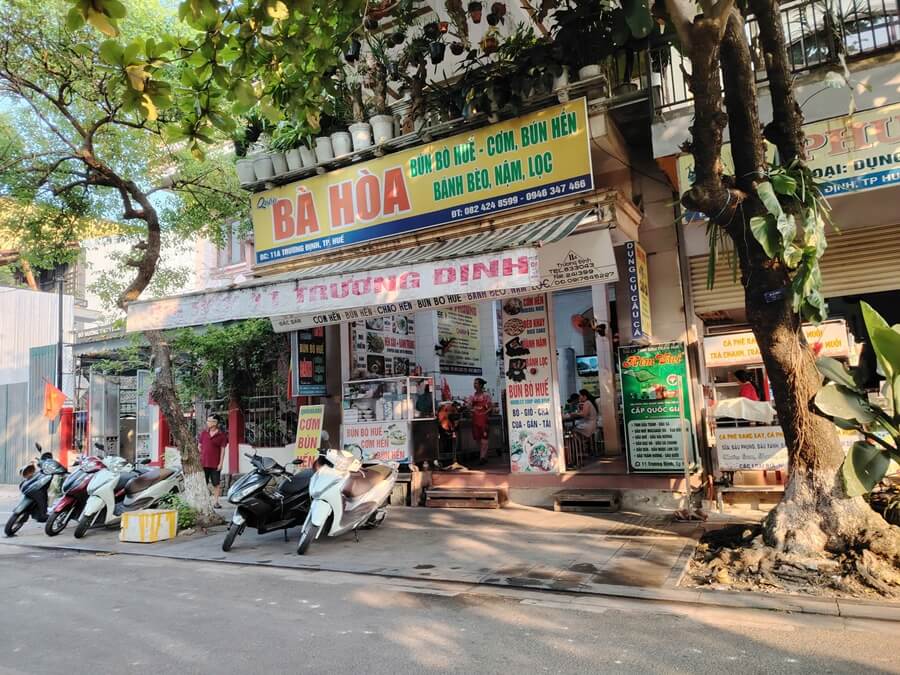
Located right in the city center, Ba Hoa is the most accessible option. This is one of the few places where the flavors feel slightly cleaner and more balanced, making it easier for first-time visitors. The vegetables are crisp, and the overall presentation is neat and more approachable than at many other local spots. In the past, this street had several clam rice stalls, but over time, only this one remains. That, in part, has helped it maintain a familiar presence among locals.
Opening hours: 6:00 AM – 7:30 PM
Clam Rice 17 – 17 Han Mac Tu Street, Hue City
Near the Dap Da area, this place reflects a truly local Hue style, with a very simple setup and a corrugated metal roof that can make it quite hot at midday. It is a good place to observe how locals eat clam rice in their daily routine. However, the setting and service may feel more comfortable for Vietnamese customers than for international travelers.
Opening hours: 6:30 AM – 11:00 PM
Lanh Clam Rice (Clam Noodle Soup) – 23 Ngo Gia Tu Street, Hue City
Hidden on a small street in the city center, Lanh offers a calmer atmosphere, with a few tables set under the shade of trees. The space is simple and reflects the spirit of Hue’s sidewalk eateries. It is a good option if you are looking for a slower-paced experience, though it is still closer to local habits than to international dining standards.
Opening hours: 6:00 AM – 1:00 PM
In addition, there are still very small vendors set up along sidewalks or tucked into alleyways. For example, in Alley 16 Van Cao, a few stalls open only in the morning, from around 6:00 AM until they sell out, mainly serving nearby residents. These places do not have clear signage, but they reflect the true daily rhythm of Hue. If you want to find something close to where you are staying, the best approach is to ask a local. They can often point you to familiar spots that are not widely known.
Clam rice is not a typical choice for every culinary journey. It is distinctly local, with flavors and eating habits that may feel unfamiliar to many travelers.
Understanding the dish can sometimes be more important than trying it. And if you do choose to experience it, a small portion, in the right setting, may be the best way to appreciate it while staying comfortable during your trip.