
Not meant to fill you up, Banh Beo Hue is meant to be savored, with each small bowl offering layers of flavor.
Each tiny, delicate portion is just the right size for a single bite, reflecting the refined influence of Hue’s royal cuisine.
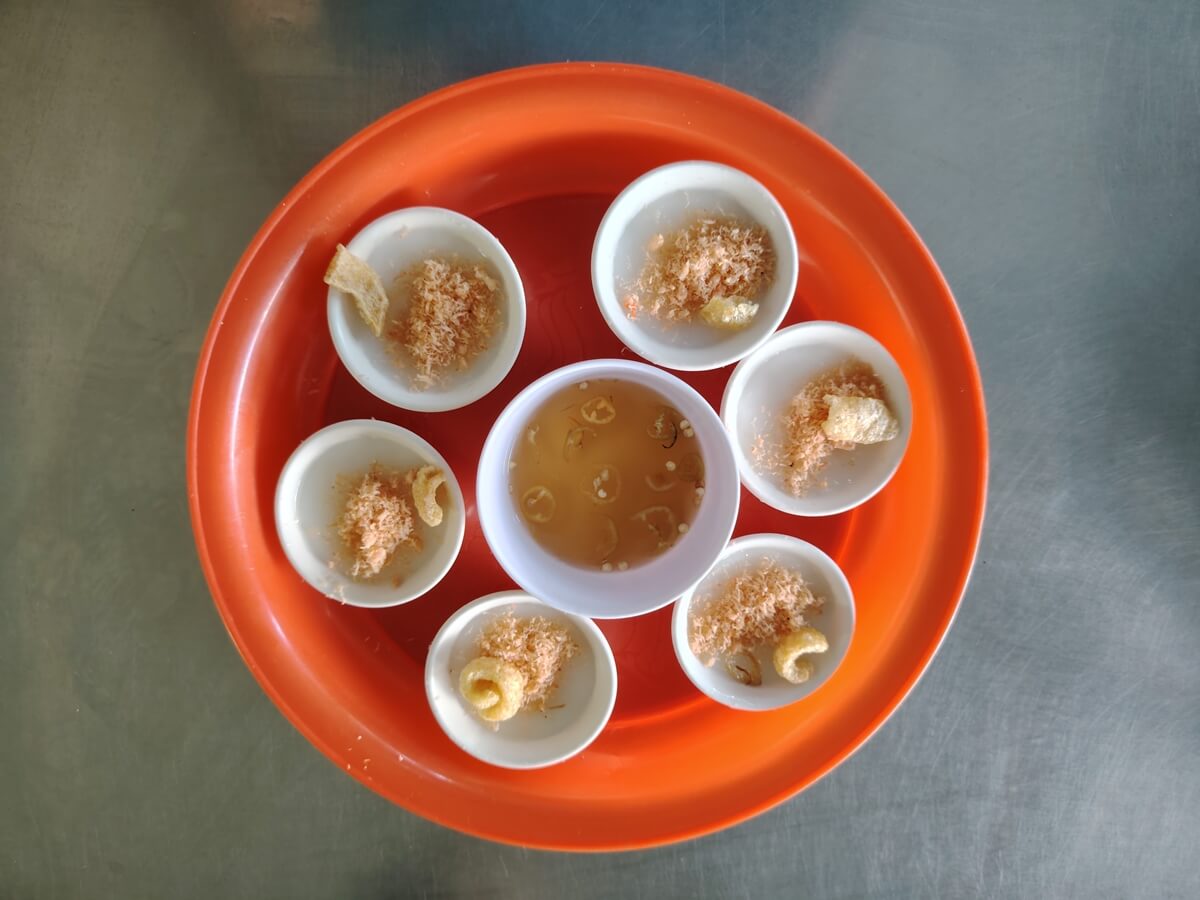
When arranged on a tray, the many small bowls resemble tiny flowers. The white of the rice batter, the golden color of the fried shrimp, and the hint of brown from the pork cracklings come together, making the table feel as if it’s adorned with colorful, delicate blossoms.
1. What is Banh Beo Hue?
Banh beo Hue (Bánh bèo Huế) can be roughly understood as small rice dumplings from Hue City.
Banh beo Hue is a type of steamed rice cake, served not as a single dish, but as a collection of small, shallow bowls, each holding just a few bites.
The base is made from rice flour, giving it a soft and slightly chewy texture. On top, you will usually find a mix of finely ground shrimp, crispy pork skin, and sometimes a drizzle of scallion oil. A light fish sauce is added just before eating, bringing everything together without overpowering the dish.
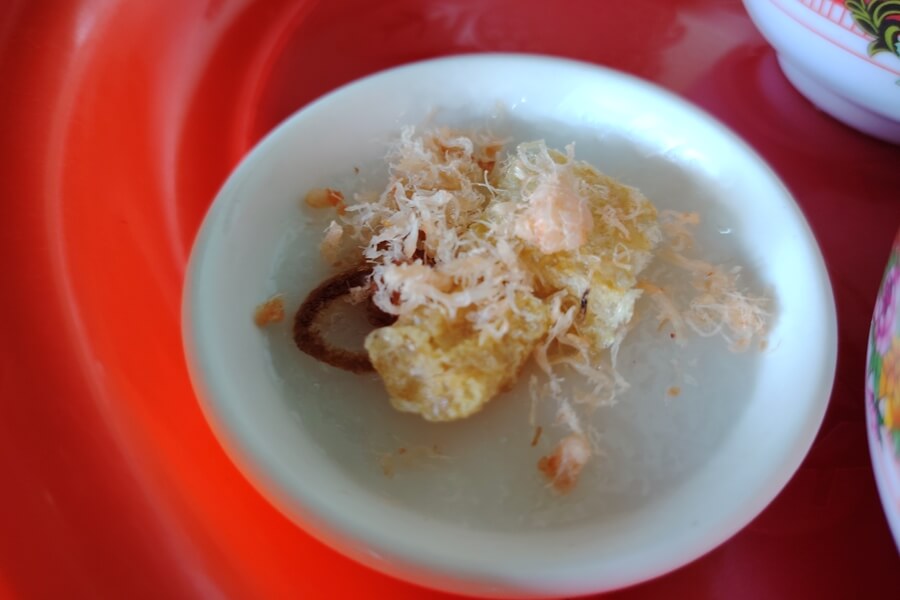
Instead of being plated like a typical meal, banh beo is arranged in multiple small portions. Each one looks the same, and each one is meant to be finished in just a few spoonfuls.
In Hue, the size of banh beo is not random. Each cake is steamed in a small ceramic bowl, creating its thin and delicate shape, often compared to a floating water fern. The small size allows the batter to cook quickly and evenly, helping the cake stay soft and slightly elastic.
There is also a deeper reason behind it. Hue’s food culture was shaped by imperial dining, where meals were served as many small dishes instead of one main plate. Each item was meant to be tasted, not to make you feel full.
That is why, even today, banh beo is rarely eaten in just one or two portions. Locals often order several bowls at once, especially older diners who prefer to eat many small plates until it feels complete.
This way of serving makes banh beo feel less like a single dish and more like a rhythm of eating, where each small portion builds into a complete experience.
2. Why Banh Beo Hue is Different
Hue-style banh beo is not just a familiar dish, but a unique, refined version that stands out from banh beo in other regions.
If you try it once, you will easily notice the difference. Hue-style banh beo is much smaller, with each bowl holding only a few spoonfuls, while Hoi An banh beo is usually thicker, and Quang Ngai banh beo is larger and more filling. This smaller size also leads to a different way of eating. Instead of having one large portion, you go through several small bowls in a row.
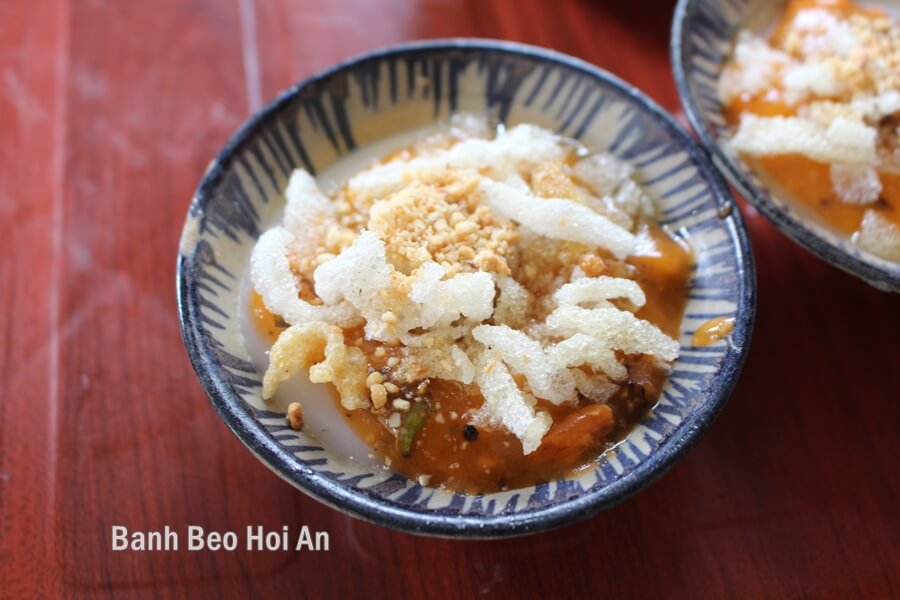
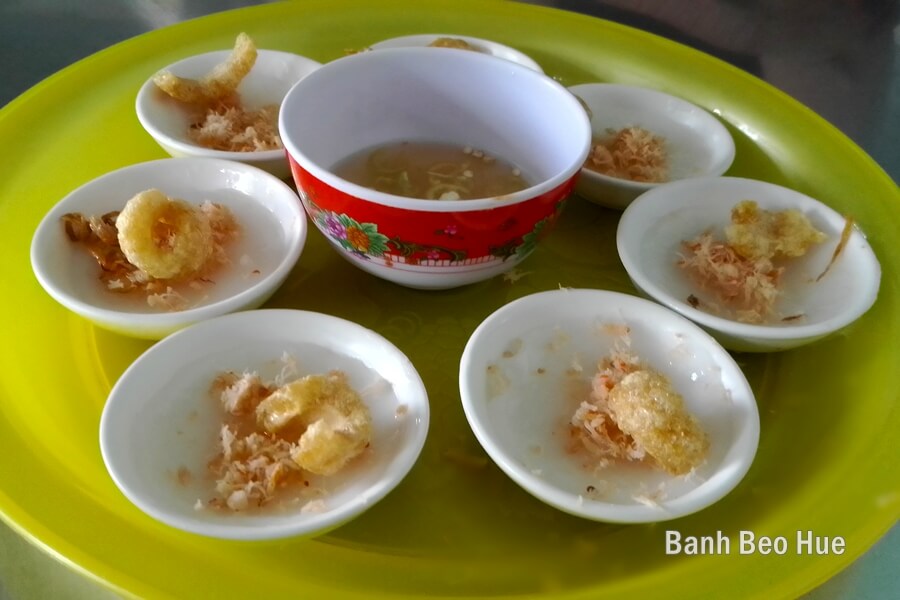
This difference is not accidental. Hue cuisine is strongly influenced by royal court traditions, where meals consisted of many small dishes, each carefully prepared in both appearance and flavor. As a result, Hue-style banh beo is not only smaller, but also more delicate, from the thinness of the batter to the balanced combination of toppings.
In short, what sets Hue-style banh beo apart is its small size, the refinement in its preparation, and the clear influence of royal court cuisine, creating a distinctly different culinary experience from other regions.
3. How locals eat Banh beo Hue
Banh beo Hue is not just different in how it is made, but also in how it is eaten. If you are not familiar with it, it is easy to eat it the wrong way and miss the full experience.
It is usually served on a tray, with multiple small bowls arranged together. Depending on the place, you can order a small or large tray. A small tray is typically about half the size of a large one, while a large tray often comes with around 10 bowls, enough to share or enjoy on your own.
Each bowl is usually topped with dried shrimp, fried shallots, and crispy pork skin or pork cracklings. A small bowl of lightly sweet fish sauce with chili is served on the side. At some places, the crispy pork topping is served separately instead of being placed on top. In that case, you should add it to each bowl yourself to keep the texture crisp.
The way you eat it is just as important. Instead of pouring sauce over the whole tray, you add a small amount to each bowl individually. About half a spoon of fish sauce per bowl is enough, along with a slice of chili if you like some heat. Then, using another spoon, gently run it along the edge of the bowl and lift the cake by rotating slightly. Each bowl is just one bite, simple and clean.
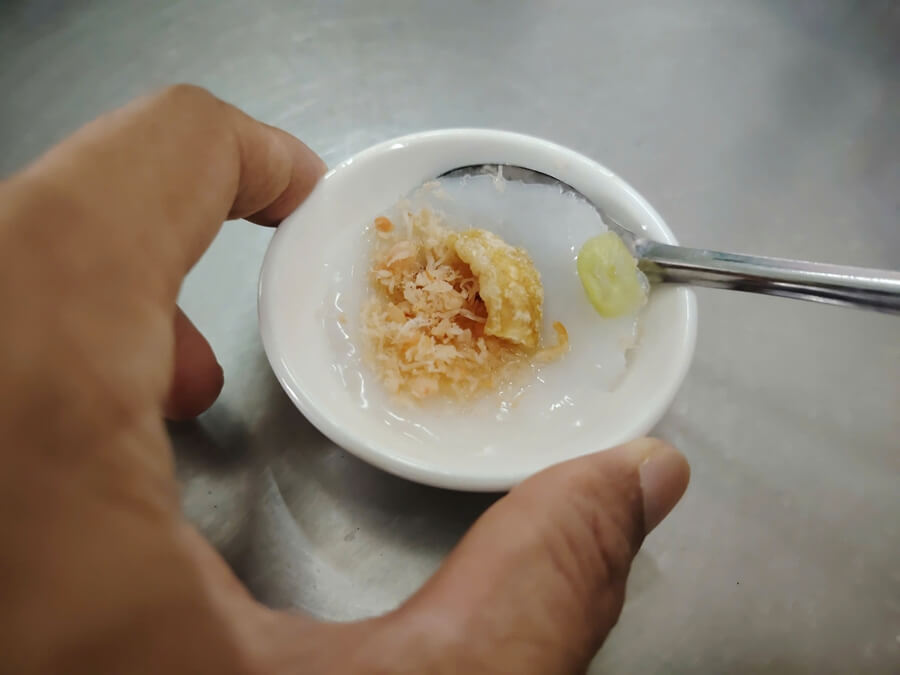
Because the portions are so small, Banh beo Hue is rarely eaten as a single serving. Locals usually go through multiple bowls in one sitting. A small tray is enough for a light snack, but if you want to feel full, you will likely need more, depending on your appetite.
In the end, it is not a dish you finish in one go, but a way of eating that builds slowly, one small bowl at a time.
4. What Banh beo Hue tastes like
Banh beo Hue is not a dish that makes a strong impression from the very first bite. Its flavors are light, refined, and clearly layered, becoming more harmonious the more you eat.
The base is made from rice flour, soft with a slight chewiness from a small amount of tapioca starch, firm enough to hold its shape yet quick to melt in your mouth. On top, the dried shrimp brings a rich savory-sweet flavor that stands out. This is balanced by the crispiness of pork cracklings or fried pork skin, adding a light richness and a pleasant texture. Occasionally, when you bite into a bit of fried shallot, its aroma suddenly comes through, a small detail that makes the dish more interesting.
The fish sauce is lightly diluted, with a gentle balance of sweetness, saltiness, and a subtle hint of chili. When added, it does not overpower but instead enhances the other components, allowing everything to come together naturally.
All of this creates a flavor experience that is not bold, but refined enough to make you want another bowl, and then another.
6. Where to eat Banh beo Hue
In Hue, it is not hard to find a place that serves Banh beo Hue. However, if you want a more authentic local experience, choosing the right spot can make a noticeable difference.
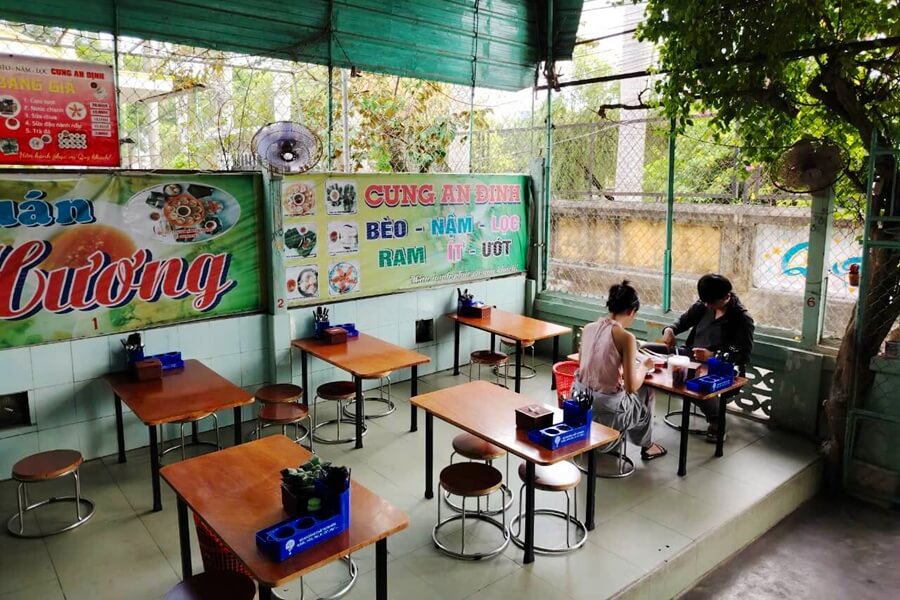
Below are a few places that offer consistent quality and are relatively easy to access:
- Banh beo Ba Do – 8 Nguyen Binh Khiem, Hue City
Located on the north side of the Perfume River, near Dong Ba Market. The space is open and comfortable, and it is well known among locals. It is a bit farther from the city center, but worth the visit. Visitors should avoid walking here at night, as some areas can feel quiet. Taking a taxi or ride-hailing service is recommended. - Quan Huong – 37 Alley 177 Phan Dinh Phung, Hue City
Tucked inside a small alley near An Dinh Palace. The setting is simple and very local. You will need to walk about 100 meters from the main street, as cars and taxis cannot enter the alley. - Hang Me – 29 Nguyen Cong Tru, Hue City
The most centrally located and easiest to reach. This place serves both locals and tourists, making it a convenient option if you prefer something accessible without much travel.
You do not need to try too many places. Choosing one that fits your location is enough. What matters more is experiencing Banh beo Hue the way locals do.
5. When and how to include Banh beo Hue in your food experience
Banh beo Hue is not meant to be a main meal, but works best as a light dish within a broader food journey.
Because each bowl is very small, it is usually not enough to replace a full meal. Instead, locals often enjoy it in the afternoon or between meals, when they want something light yet still interesting to eat.
If you are planning your meals for the day, Banh beo Hue is best included alongside other dishes rather than as a standalone stop. For example, you can have it before moving on to more filling dishes, or simply as a light break in the afternoon.
In the end, Banh beo is best experienced as part of a culinary journey through Hue food, rather than as a dish to build an entire meal around.
6. Common mistakes when eating Banh beo Hue
Banh beo Hue may look simple, but if you are not familiar with it, it is easy to eat it the wrong way or order in a way that affects the overall experience.
If you are an international traveler visiting on your own, especially in a group of one or two, it is best to start with a small portion, about half a tray, to see if it suits your taste. Although each bowl is small, the base is made from rice flour and tapioca starch, giving it a slightly chewy texture that may not immediately appeal to those who are new to Vietnamese food.
That said, half a tray is usually not much in budget. If you are with another person, you should consider ordering a few additional dishes to go along with it. Most places that serve Banh beo also offer other local dishes such as banh nam or banh loc, which can help round out the meal and feel more appropriate when ordering.
When eating, do not forget to add fish sauce. On its own, Banh beo Hue can taste quite mild, and it is the lightly seasoned fish sauce that brings out the full flavor of the dish.
How you eat it also matters. Banh beo Hue is not eaten with chopsticks, but with a small spoon used to gently lift the cake from the bowl. The fish sauce should be added directly into each bowl before eating, rather than dipping. If you dip each bite into a shared bowl of sauce, the toppings like dried shrimp can fall into it, which is not ideal when sharing with others.
In the end, by ordering the right amount, eating it the proper way, and adding fish sauce at the right moment, you will be able to fully appreciate the subtle elegance of Banh beo Hue.
7. A more complete way to experience it
Trying Banh beo Hue on your own can be a great experience, especially once you understand how to order and eat it properly.
At the same time, Hue’s food culture is built around many small dishes, each with its own way of being served and enjoyed. Without some local guidance, it can be easy to miss how these dishes connect within Hue’s overall food experience.
If you want to try Banh beo Hue the right way, along with other local dishes in the right order and setting, joining a Hue street food tour can make the experience much easier and more meaningful.