
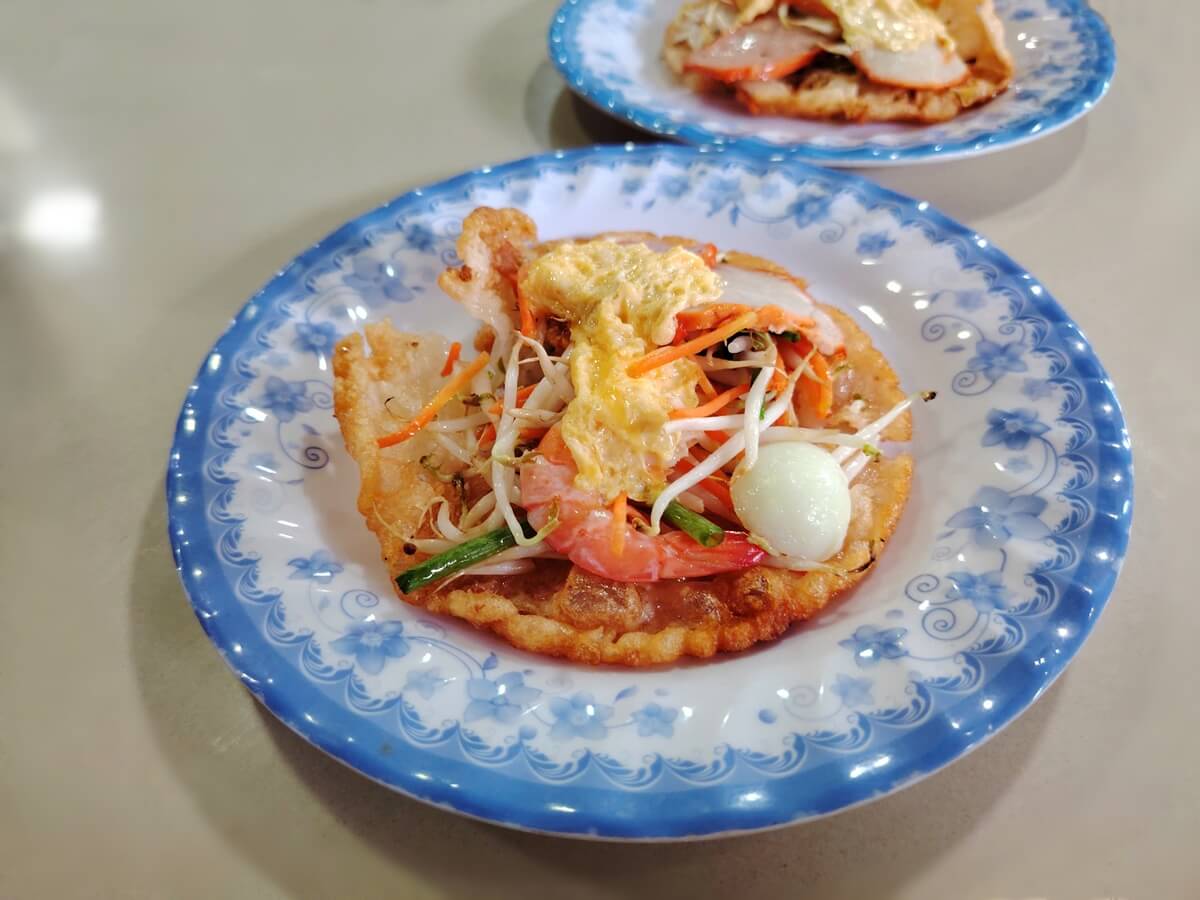
Banh Khoai Hue, also known as a Hue pancake, reflects the refined culinary skills of the royal chefs from the ancient Nguyen Dynasty.
Developed from the familiar Banh Xeo, this dish was reimagined with more elaborate details in size, crust, filling, dipping sauce, and accompanying vegetables. These changes turned a simple pancake into a more distinctive and visually striking specialty of Hue.
How is Banh Khoai Hue?
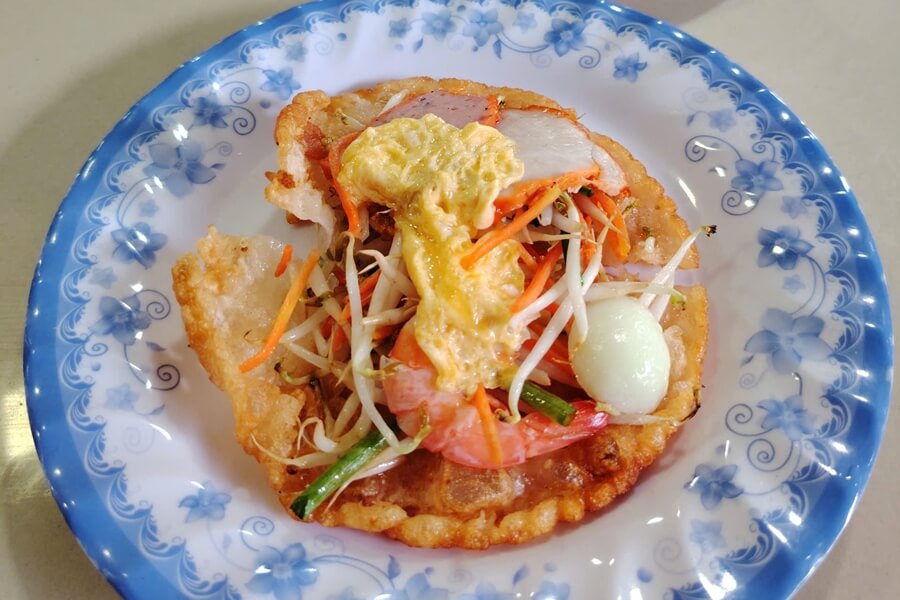
Originally inspired by Banh Xeo, Banh Khoai in Hue was adapted to reflect a more refined style of cooking associated with the imperial city.
Instead of being large and simple, each pancake is made smaller but more carefully composed. It is expected to deliver multiple layers of flavor, a balanced nutritional profile, and an appearance that feels both appealing and well-crafted.
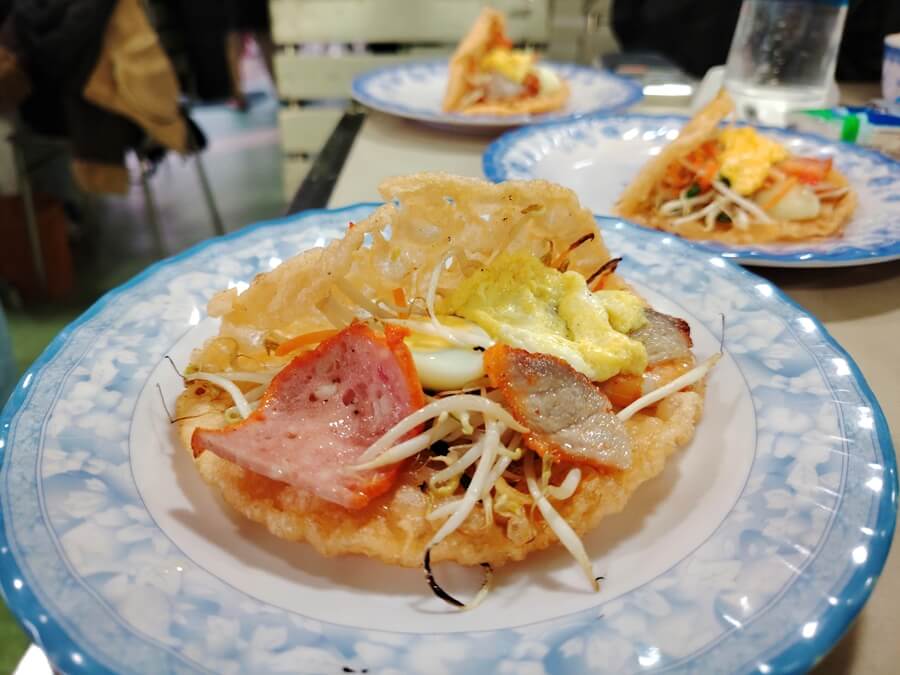
Compared to Banh Xeo, Banh Khoai has a thicker and crispier crust with a slightly airy texture. The filling is more generous, often including shrimp, pork, eggs, and slices of Vietnamese pork sausage, along with vegetables like bean sprouts and carrots.
What completes the dish is its distinctive dipping sauce, made richer and more complex than the usual fish sauce. It is typically served with fresh herbs, young figs, star fruit, and pickled vegetables, creating a combination of flavors that is both bold and balanced.
What Makes Banh Khoai Different from Banh Xeo?
Although both dishes share the same origin, Banh Khoai in Hue was developed with a more refined approach, creating clear differences from the more familiar Banh Xeo.
Banh Khoai is smaller in size, yet richer in composition. Its filling is thicker and more varied, often combining shrimp, pork, eggs, and additional ingredients that give each bite more substance. In contrast, Banh Xeo is larger with a thinner layer of filling.
Another key difference lies in the sauce. Banh Khoai is served with a thicker, carefully prepared sauce made from peanuts and pork liver, offering a deeper and more layered flavor. Banh Xeo, on the other hand, is typically paired with a lighter fish sauce.
The way the two dishes are eaten also sets them apart. Banh Xeo is usually wrapped in rice paper with vegetables before eating, while Banh Khoai is enjoyed directly in smaller portions, allowing the balance of flavors to come through more clearly.
Taken together, these differences make Banh Khoai feel more composed and concentrated, while Banh Xeo remains lighter and more casual in style.
The Signature Elements of Banh Khoai
What makes Banh Khoai memorable is the way each element comes together in balance. From the crust to the filling and the sauce, every part plays a clear role in shaping the overall experience.
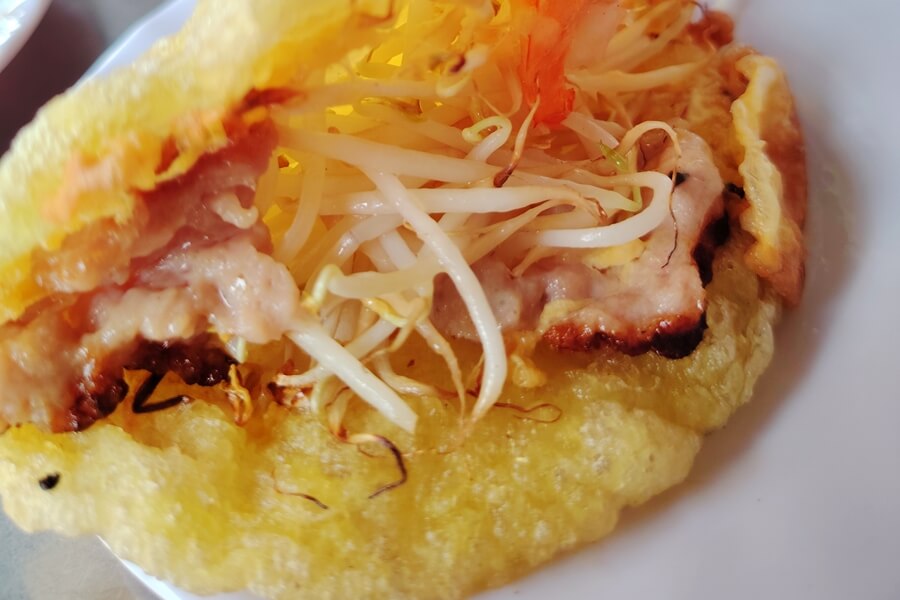
Crispy Golden Crust
The base is made primarily from rice flour, often blended with a small amount of other starches. When cooked, it forms a thin golden layer that is crisp on the outside while remaining light and slightly airy inside.
Rich and Generous Filling
Inside, the pancake holds a well-layered filling of shrimp, pork, eggs, and slices of Vietnamese pork sausage. The ingredients are arranged in a way that feels full but not overwhelming, giving each bite both texture and substance.
The Soul of the Dish: Nuoc Leo Sauce
What truly defines Banh Khoai is its dipping sauce. Made from peanuts and pork liver, the sauce is thicker and more complex than the usual fish sauce. It adds depth and brings all the elements together, creating a flavor that is both rich and balanced.
Taken together, these elements do not stand apart, but support one another, allowing Banh Khoai to be enjoyed as a complete and carefully composed dish.
How Locals Eat Banh Khoai
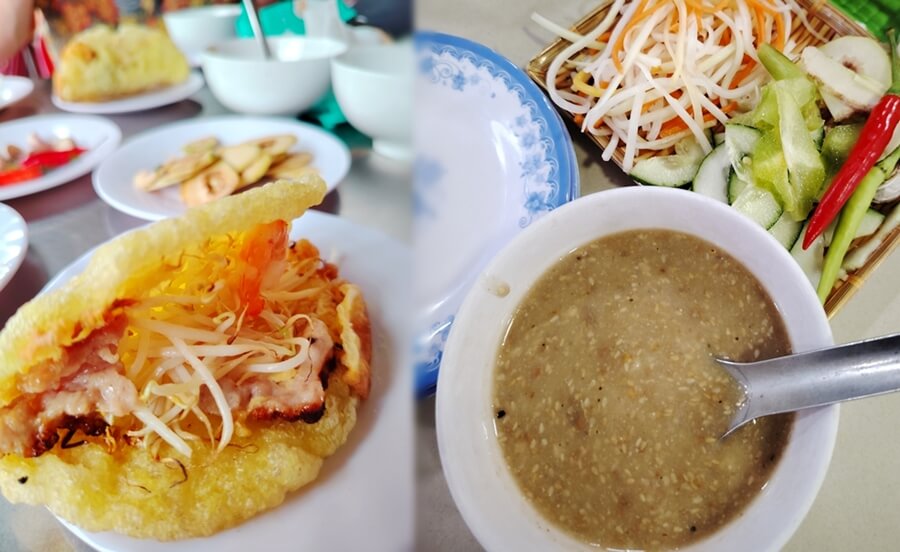
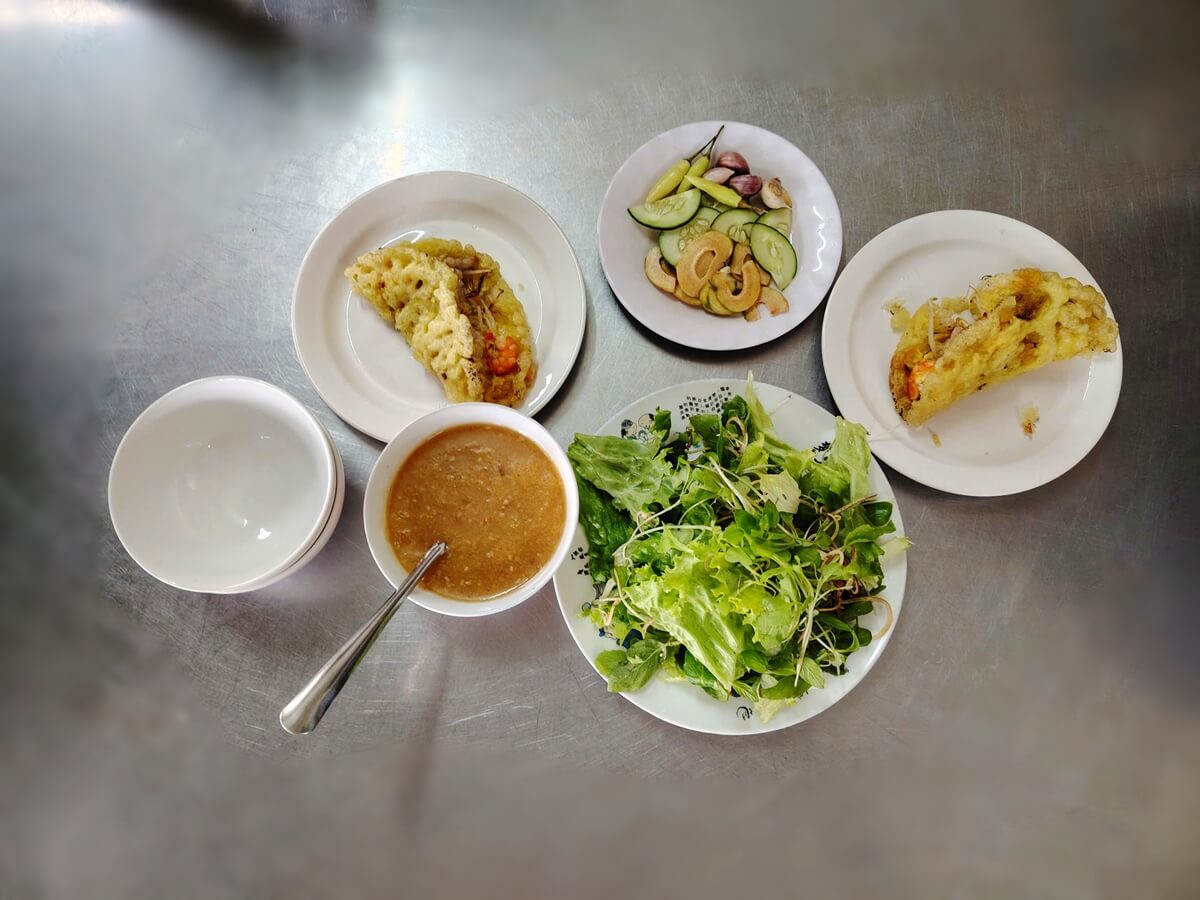
Unlike Banh Xeo, when eating Banh Khoai, people do not roll the cake with raw vegetables on thin rice paper. Because Banh Khoai has a thick filling, while its base is crispy and small, it is not suitable for rolling.
Also, the Hue Pancake on the plate is usually folded in half, loosely covering the filling inside.
People often use scissors to cut Banh Khoai into two halves. The diner puts on the pancake filled with a little sauce, a few stalks of papaya, sweet and sour carrots, figs, star fruit, and some raw vegetables.
Normally, people use their hands to hold the pancake from the plate to eat. A few others use chopsticks to pick up pancakes. Both of these ways of eating are suitable. However, eating with chopsticks seems to be a bit difficult, as the vegetables and sauce are easily separated from the thick pancake base.
Where to Eat Banh Khoai in Hue
To experience Banh Khoai in Hue, choosing the right place can make a noticeable difference. Each restaurant brings its own style, while still preserving the essential character of the dish.
Banh Khoai Hong Mai – 110 Dinh Tien Hoang
The pancake here is evenly golden, with a light and refined appearance. The combination of shrimp, pork, egg, carrot, and bean sprouts is well balanced, creating a harmonious mix of color and flavor.
Banh Khoai Lac Thien – 6 Dinh Tien Hoang
This version is slightly thicker than others, yet it remains crisp. It is known for its larger shrimp and round slices of pork sausage, giving the dish a fuller and more satisfying texture.
HotTuna Restaurant – 37 Vo Thi Sau Street
Located in a lively central area, this restaurant is a convenient option for international visitors. The flavor and presentation are comparable to local spots, while the service is more attentive and carefully arranged.
Taken together, these places offer different ways to enjoy Banh Khoai, from traditional local settings to more accessible dining spaces for travelers.
Banh Khoai in Hue Food Culture
Banh Khoai reflects a transition in the culinary culture of Hue, from royal kitchens to everyday dining. Originally shaped by the refined standards of the Nguyen Dynasty, the dish was expected to be not only flavorful but also visually balanced and carefully prepared.
Over time, Banh Khoai became more widely enjoyed and is now a familiar part of local life. While its origins suggest a more elaborate style, it is commonly served as a casual dish, often enjoyed from midday to evening rather than in the early morning.
Today, Banh Khoai can be found in both simple local eateries and more structured restaurant settings. It is usually prepared fresh and served immediately, so it may still be quite hot when served, with its crisp texture and rich flavors at their best.
Taken together, Banh Khoai represents both heritage and everyday life in Hue. It is not only a daily dish, but also a thoughtful way locals welcome friends and guests.
If you are interested in discovering more dishes like Banh Khoai, explore our guide to local food in Hue City.
Can You Make Banh Khoai at Home?
Banh Khoai can be prepared at home, although it often requires a bit more care to achieve the same texture found in Hue. Traditionally, the dish is cooked in a small cast iron pan, while a medium-sized non-stick pan can be a practical alternative.
The ingredients are simple and familiar, focusing on a rice flour batter, a generous filling, and a rich dipping sauce.
At a glance:
- Batter: rice flour with a small amount of starch for texture
- Filling: shrimp, pork, eggs, Vietnamese pork sausage, bean sprouts
- Sauce: peanut and pork liver base
In practice, the batter is poured into a hot pan, topped with fillings on one side, then folded and cooked until crisp and golden. It is best enjoyed while still warm, when the texture and flavors are at their most balanced.
While it can be made at home, Banh Khoai is often appreciated more when freshly prepared and served right away, just as it is in Hue.
Want to experience Banh Khoai the way locals do?
Join a curated food experience in Hue and discover how each dish is meant to be enjoyed.